

Data User Insights enhanced the ability of LMI data users to access, collect, analyze, and communicate high-quality labor market information to workforce policymakers, jobseekers, and other stakeholders. This initiative was funded by the Employment Training Administration (ETA).
Project Overview
MOTIVATION: Many data users lack the knowledge, skills, and awareness to effectively access and utilize state produced labor market information (LMI) for decision-making. Simultaneously, many state LMI agencies lack the capacity, training, or funding to deploy and communicate the data they produce for effective use.
OBJECTIVE: Enhance the ability of LMI data users to access, collect, analyze, and communicate high-quality labor market information to workforce policymakers, jobseekers, and other valuable stakeholders.
STRATEGY: Identify strengths and opportunities for development in the existing ecosystem of LMI data producers (i.e., state LMI offices) and data users, then utilize a cohort learning model to identify state-level strategies for shoring up these strengths while addressing challenges/gaps. These state-level strategies will inform the development of technical assistance and training offerings that can be deployed more widely to data producers and users in other states.
01
User Discovery
In-person and virtual meetings and surveys with data users, through partners like NASWA and NAWB, to understand practices and pain points.
02
Producer Input
Surveys and briefings with state LMI directors on their strongest data products and primary users, shared at BLS and LMII meetings.
03
Data User Insights Academy
State teams work together for 9 months to examine opportunities for strategic alignment between LMI offices and data users.
04
Training & Roundtables
Findings become curricula and TA. This took the form of the Data User Insights Roundtable webinar series and tip sheets.
Data User Insights Academy
The Data User Insights Academy is a collaborative learning environment in which state-based teams of data producers (state LMI agencies) and data users come together over a 9-month period—in-person and virtually—to identify opportunities to build closer relationships as well as work on addressing specific challenges related to the use and communication of LMI data in their state.
State teams were provided with a team of experienced facilitators as well as ongoing technical assistance and subject matter expert support. Each team worked at their own pace alongside teams from other states going through the same process, creating the opportunity for peer learning and cross-state coordination.
Teams were comprised of:
- Core Team – four members, with two representatives from the state’s LMI agency and two data user representatives. In Cohort I, this was Workforce Development Boards, and in Cohort II it was the state’s community and technical college system. The core team will participate in multi-state meetings with other core teams and will drive convenings and conversations among the home team.
- Home Team – additional state, workforce system or stakeholder representatives whose input is critical for the success of the state’s strategic collaboration.
The work of the core team was supplemented with facilitated support from the LMII through two multi-state meetings (one in-person at the start of the process, one virtual at the end), monthly calls, and one in-state site visit by facilitators with the full home team. The state teams will also be provided with ongoing technical assistance delivered by subject matter experts from the LMII and its network of partners.
From developing new data dashboards to launching local engagement strategies and training programs, each state team made incredible progress over the nine months towards greater alignment, communication, and collaboration. LMI teams quickly learned that many data users in the workforce system weren’t aware of their existing data products and services. As a result, every state has taken new steps to increase outreach and open lines of communication with data users.
Cohort I
July 2024 – April 2025
State LMI Agencies + State/Local Workforce Development Boards
Florida, Iowa, North Carolina, Ohio, Pennsylvania, Texas
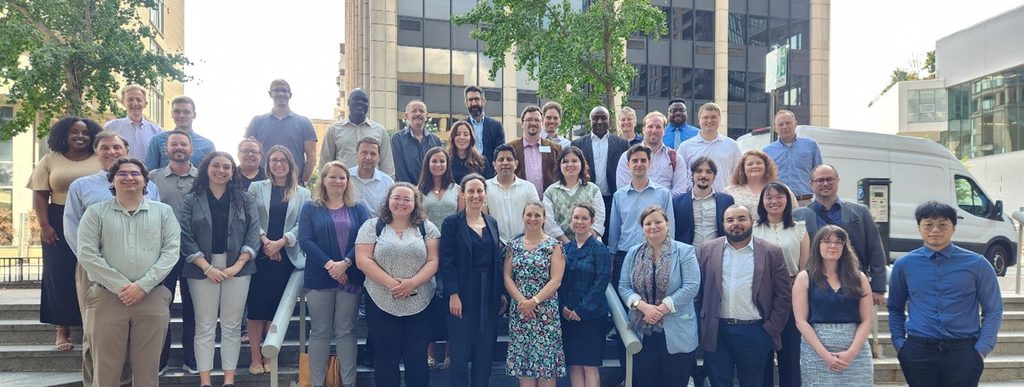
Read more about what teams from the first cohort accomplished here.
Cohort II
April 2025 – January 2026
State LMI Agencies + Community and Technical College Systems
Hawaii, Louisiana, New Jersey, South Carolina, Washington
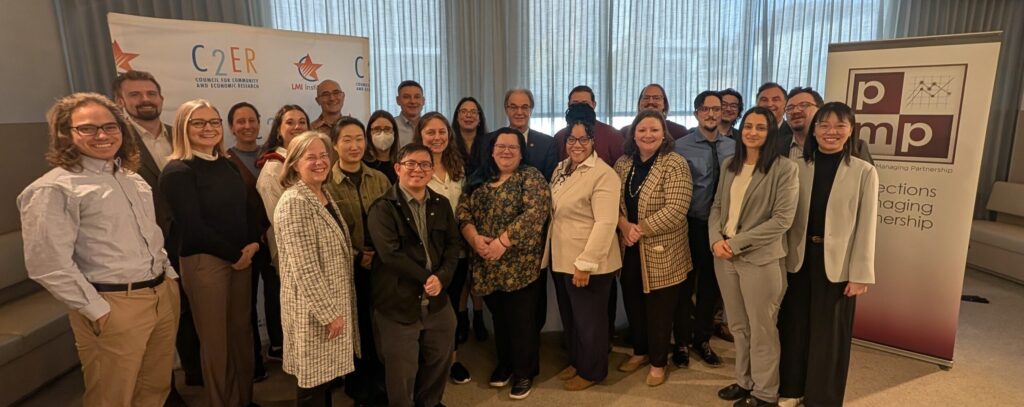
Read more about what teams from the second cohort accomplished here.
Training & Roundtables
Based on producer input and the DUIA cohorts, the LMI institute created webinars and tip sheets to respond to the issues raised. These are aimed to address the identified needs of both labor market information data producers and data users seeking to serve jobseekers and workforce policymakers, covering topics such as data collection, analysis, and dissemination; labor market analysis; and effective use of labor market information for decision-making.
Data User Insights Tip Sheets
Data Dashboard Development: A Tip Sheet for LMI Data Producers
Creating an effective data dashboard is essential for turning data into actionable insights. This tip sheet provides guidance for developing dashboards that are not only visually appealing but also functional for all types of users.
User Needs Assessment Guide for State LMI Offices
A user needs assessment can help state LMI offices systematically understand how users interact with their data products and where gaps exist. This tip sheet explains how to conduct a needs assessment, interpret the data, and take action on insights.
Steps and Tips for Creating Personas
Developed with the Washington Employment Security Department, this tip sheet shares what a persona is, how and why a state LMI office should create personas to better understand their data users, and a case study from Washington’s experience during DUIA.
Data User Insights Roundtable
The Data User Insights Roundtable webinar series convened data producers and users to learn from one another. Webinars were developed with and led by experienced trainers who have a deep understanding of labor market information data production and usage. Training modules were also provided to partners such as the National Association of Workforce Boards, the American Association of Community Colleges, or the Council for Community and Economic Research.
Recordings and materials from these roundtables are below.

-
Oct
22
2026
Data Insights Roundtable: Reimagining the Future of Education and Workforce Training Data
Chris Mullin, Lumina Foundation · Shelly Martinez, Statistical Policy Consultant
-
Aug
27
2026
Data Insights Roundtable: 2026 LMI Award Winners
Cara Welch, California · Lesley Hirsch, New Jersey · Dylan Craig, North Carolina · Amy Vander Vliet, Bingjie Kong, and David Genz, Oregon
-
May
28
2026
Data Insights Roundtable: State Data Sharing Models
Ruth Archer and Scott Powell, Michigan Department of Technology, Management, and Budget · Matt Berry and Sam Keathley, KYSTATS
-
Mar
19
2026
Data Insights Roundtable: Modernizing State LMI
William Beach, Fiscal Lab on Capitol Hill · Gustavo Aviles, Washington State Employment Security Department · Mariana Vega, Texas Workforce Commission
-
Jan
29
2026
Data Insights Roundtable: State LMI in a Time of Federal Uncertainty
Erica Groshen, U.S. Bureau of Labor Statistics · David Schmidt, State of Nevada Department of Employment, Training, and Rehabilitation · Veronica Gielazauskas, MO Department of Higher Education and Workforce Development
-
Oct
29
2025
Data Insights Roundtable: AI in LMI
Jeff DeBellis, North Carolina Department of Commerce · Nicol Nicola, New Jersey Department of Labor and Workforce Development · Gary Sincick, Oregon Employment Department
-
Aug
26
2025
Data Insights Roundtable: California Workforce Supply & Demand Dashboard
Wilhelm Lichnock, Jordan Julian, and Michael Boucher, California Employment Development Department
-
Jun
17
2025
Data Insights Roundtable: How Community Colleges Are Using LMI to Shape Programs and Student Outcomes
Leighton Johnson, Ivy Tech Community College · Marisa Hayes, Northern Virginia Community College
-
Mar
3
2025
Data Insights Roundtable: Mobilizing Data for Talent Development
Erin Bibo, CityWorks DC · Monica Dodge, DC Office of Education Through Employment Pathways · Allison Forbes, CREC
-
Jan
30
2025
Data Insights Roundtable: Creating WINning Data Products with the Workforce Intelligence Network
Kevin Cranick, Workforce Intelligence Network
-
Aug
27
2024
Data Insights Roundtable: Mastering Public Sector Marketing: A Framework for Government Marketing
Danielle Tharaldson, CareerOneStop
-
Jun
20
2024
Data Insights Roundtable: Leveraging CareerOneStop Data & Tools
Tricia Dahlman and Bill McMahon, CareerOneStop
-
Apr
29
2024
Data Insights Roundtable: Empowering LMI Data Users to Develop Insights Through Active Outreach and Engagement
Jeff DeBellis and Jamie Vaughn, North Carolina Department of Commerce
-
Feb
22
2024
Data Insights Roundtable: Policy Development from Inception to Implementation
Christine Blumauer and Nicol Nicola, New Jersey Department of Labor